
Last November I was at the Indiana Statehouse to support the Red for Ed Action Day in support of Indiana teachers. In the sea of red shirts, hats, and posters, one message stood out in particular–”Don’t make me use my teacher voice.” Well, LOL…Don’t make me use my teacher voice. If I had a dollar for every time I’ve heard my elementary teacher wife say that, I’d already be retired. And believe me, she has a good teacher voice! If you don’t know what a teacher voice is, it has the power to halt a bear in mid-attack, rise over the din of a jackhammer, and necessitate the changing of undergarments when properly employed. It is purposeful, direct, and effective at any frequency and volume. The barely audible, calm, and calculated conveyance of it is the one that always gets me.
Highly effective communicators know how to use their voice as a tool of engagement. This was sadly and horrifically true for Adolf Hitler. Aside from the hate-filled antisemitic rhetoric he spewed, his control of voice, both in meter and volume, was mesmerizing. Often it would be quietly hushed forcing the crowd to quiet and lean in. Other times it was like an old wind-up air raid siren that would start with a low, slow baritone and build to a fevered alto pitch. With highly effective communicators it almost doesn’t matter what they are saying, but how they are saying. Adoring fans of the late actor Richard Burton would say, “I’d listen to him read the telephone book aloud.”
Then, there are communicators who have the gift of effectiveness for what they say, and how they say it. Communicators gifted in this way, I believe, have captured the essence of their authentic voice. They are speaking their truth in such a way that communicates a clear message, draws in the listener, and reveals the inner light of the speaker. Martin Luther King, Jr. James Baldwin. John F. Kennedy. Mister Rogers–all spoke with their authentic voices.
Depending on traffic, I have about a 30-40 minute commute from work every day (or at least in pre-COVID-19 days). Consequently, I listen to a lot of podcasts and drive time talk radio. A few years back ESPN had a nationally syndicated slot in my evening drive time with a show hosted by Bomani Jones. First, let’s just stop there… Bomani. The name alone is kind of bad @$$ before he ever utters the first word. His full name is Bomani Babatunde Jones. If there was ever a swag name, that’s it. Anyway, I had known of him from his running guest spot on the Dan Lebatard Show. He had a…way about him that made me like him immediately: witty, cheekily sarcastic, smooth, confident.
So when he launched his drive time show The Right Time With Bomani Jones in 2015, I thought, what the heck, let’s give it a try. I instantly liked the show. His wit and subtle sarcasm resonated with me. He was able to disarm, and when necessary, eviscerate the uniformed opinion and outright inarticulate stupidry. However, in addition to his in-show presence, there was something about his voice that I couldn’t quite put my finger on. I don’t mean the sound of it, I mean how he said things. And when I say how, I don’t mean his accent. It was the type of how that revealed his inner light. That kind of how.
In the spirit of full disclosure and transparency, often how he said things made me uncomfortable. But a good kind of uncomfortable. The reflective kind of uncomfortable that makes you uncomfortable because you know what is being said is true, and it causes you to sit and contemplate your truth. The kind of uncomfortable that produces growth.
After a couple of months, I had an epiphany. The epiphany was this… Bomani Jones was speaking with his authentic voice. He was speaking with his inner light voice. He was speaking his truth as a black man in America reflecting on sports whose rosters are primarily filled by black athletes on teams owned by white men. Was that what made me uncomfortable? No. I appreciated that he spoke his truth from that perspective. What made me uncomfortable (upon reflection) was that he spoke with a normative black voice. He spoke with a normativeness usually reserved for the dominant white male voice in our society.
He spoke as if the black population of the United States was 60%, not 13%. He spoke as if the Civil War was fought to free white slaves, and that Reconstruction was an abject failure that returned whites to their traditional position of servitude which was intentionally perpetuated by Jim Crow Laws that created separate and unequal facilities for whites, and that whites lived in fear of black vigilantes donning white robes burning crosses in their yards, and it was the white victims of terror lynching memorialized at the Legacy Museum in Montogmery, AL, and that even though there were civil safeguards in the Constitution to protect whites, it took the Civil Rights Act of 1964, the Voting Rights Act of 1965, and the Fair Housing Act of 1968 to reasonably assure those rights, and that even today, strident efforts are being made by the black majority in Congress to undercut the rights and protections of whites afforded by those acts.
It’s like he spoke from that normative perspective.
Bomani Jones’s normativeness re-entered my consciousness again through Twitter a couple of nights ago. One guy tweeted, “Ok but in all seriousness and I love Bomani and agree with him 99.9% of the time, the dude is always angry and I kind of feel like he hates everyone.”
Translation: Cause brother, I get it… Bomani spoke with his normative black voice which is different than the normative white voice that he is supposed to use to make you feel unthreatened and comfortable at all times, the voice that reflects your white experience, white norms, and white comfort. His truth offended your tender sensibilities. His normative challenged your normative
The Twittersphere pretty much nailed it…
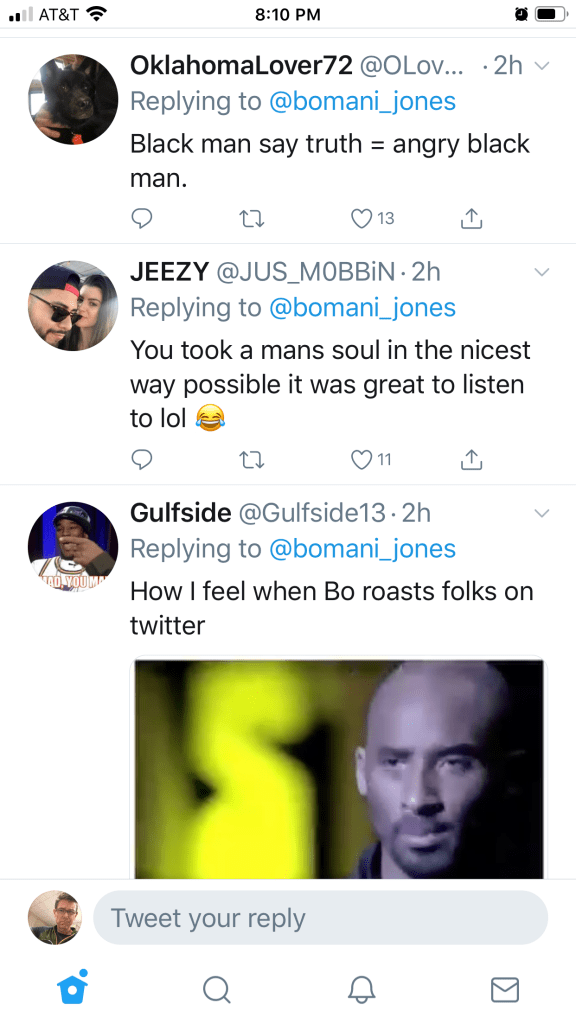
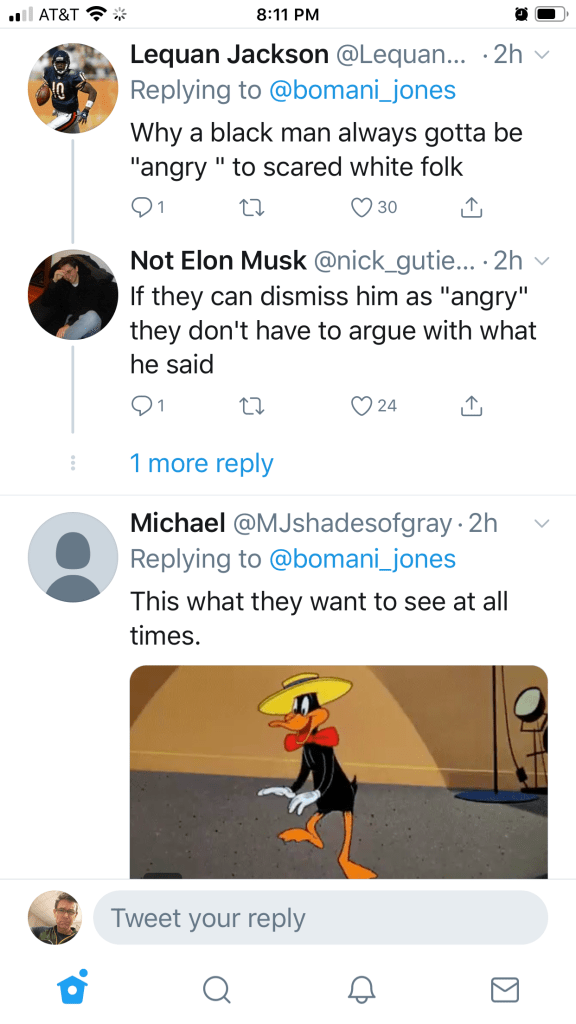
In the wake of the killing of George Floyd, if this time is to be different…if Black Lives Matters are to become the societal norm and not an episodic gesture, if we are to ever achieve equity and harmony…it’s going to take a lot of sometimes uncomfortable self-reflection on the part of a lot of folk who look a lot like me. Reflect: When ALL can speak with their authentic voice, it is no threat to me, and I lose nothing. My voice is not diminished, rather enhanced. Sometimes I sing the melody, sometimes I sing the harmony, and sometimes I sit and sing nothing and marvel at the chorus made by all the beautiful voices inspired by their inner light.
In their editorial “What the Courage to Change History Looks Like,” William Barber II, Liz Theoharis, Timothy B. Tyson, and Cornell west said, “Yes, years of police killings of unarmed African-Americans had stacked up like dry tinder. True, George Floyd’s public murder furnished the spark. But freedom’s forge must finish its work while the coals are hot. This is the hour to reimagine what America could become if ‘We the People’ meant all of us.”
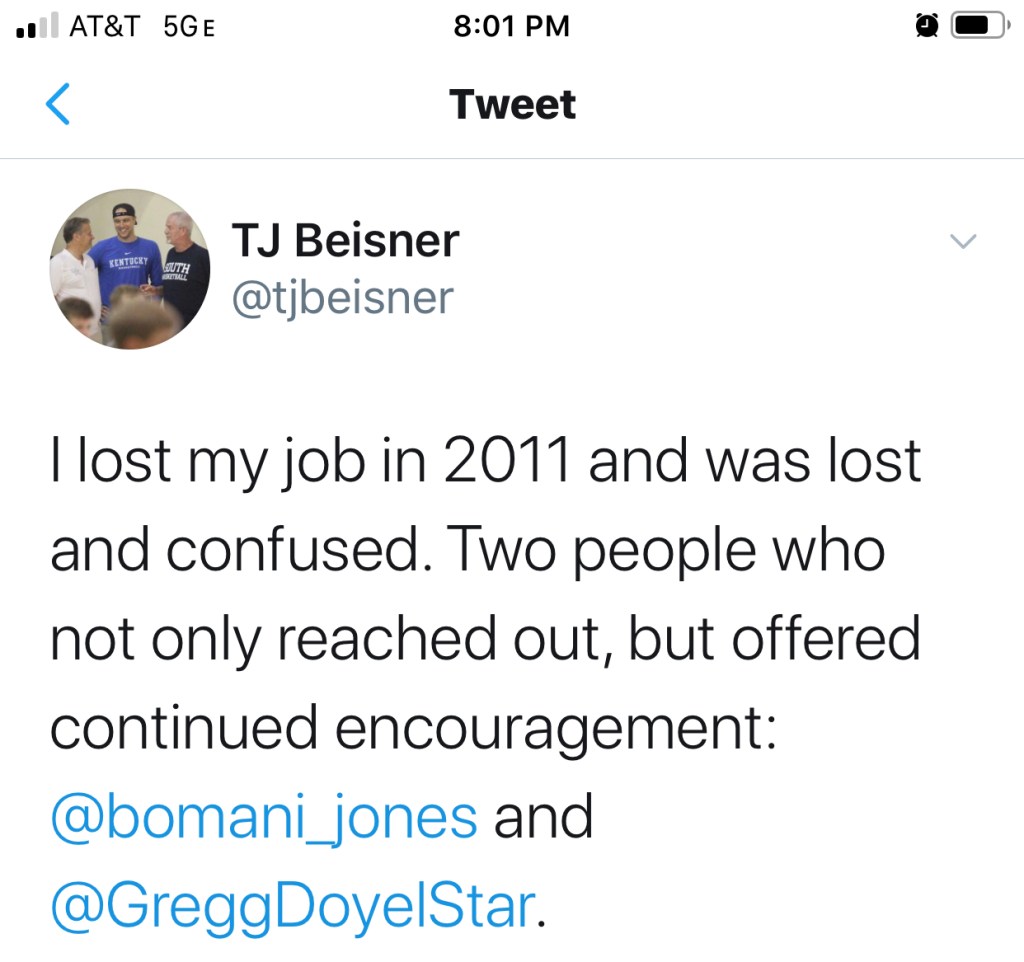
Bomani…the angry one…
 Brisket & Brawn
Thoroughly enjoying your blog. I believe you have mastered your authentic voice and you’re choosing to use it to enlighten and challenge. You are being an ally to the Black community, which is what this movement is all about. Thank you.
LikeLike
I appreciate you taking the time to read. I continue to TRY and answer the bell to Bono’s questions…”What are you going to tell your grandchildren you did…”
LikeLike